Jammu & Kashmir
Karakoram, Ladakh ranges, K2 peak, Siachen glacier, high-altitude deserts and valleys.
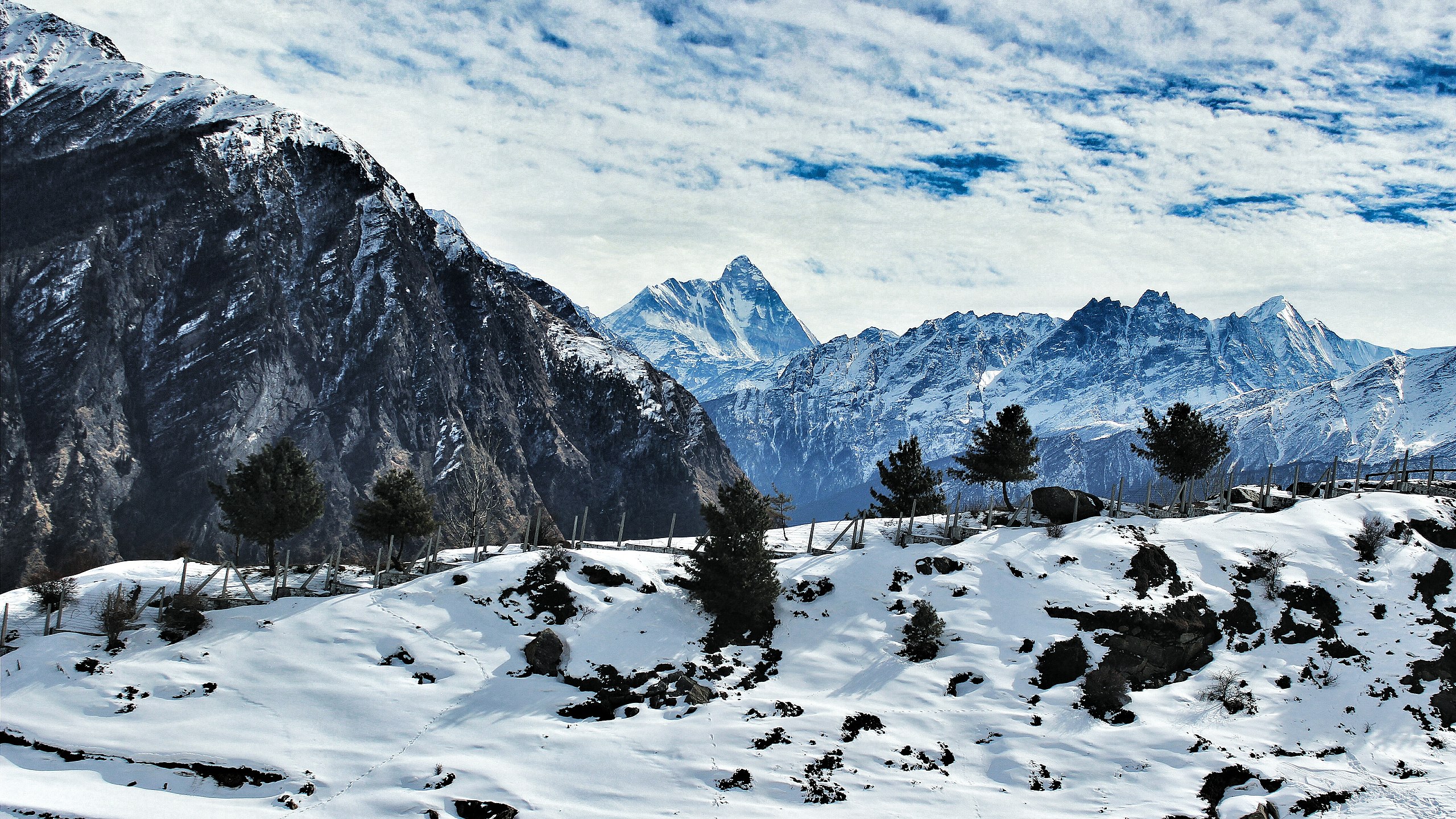
India's majestic mountain systems - from the towering Himalayas to the ancient Western Ghats. Discover the peaks, valleys, and rich biodiversity of India's highlands.
India's diverse mountain ranges shape the country's climate, ecology, and culture, from the young Himalayas to the ancient Peninsular ranges.
The Himalayas - world's youngest and highest mountain range, still rising due to tectonic activity.
Peninsular mountains like Western and Eastern Ghats, formed millions of years ago through geological processes.
Mountain ecosystems support unique flora and fauna, including many endemic and endangered species.
The mighty Himalayas stretch 2,400 km across northern India, containing the world's highest peaks and serving as a crucial water source for billions of people.
The highest range with peaks over 6,000m, including Mount Everest (8,849m), Kanchenjunga (8,586m), and other towering summits covered in perpetual snow.
Middle range with elevations 3,700-4,500m, featuring popular hill stations like Shimla, Mussoorie, and Darjeeling with temperate climate.
Foothills with elevations 900-1,200m, composed of sedimentary rocks and featuring valleys (duns) like Dehra Dun and Kotli Dun.
14 peaks over 8,000m, including Everest, K2, Kanchenjunga, and Nanga Parbat.
Source of Ganga, Yamuna, Brahmaputra, and Indus river systems feeding billions.
Over 9,000 glaciers including Gangotri, Yamunotri, and Siachen - crucial water reservoirs.
Unique alpine flora and fauna including snow leopard, blue sheep, and Himalayan brown bear.
Karakoram, Ladakh ranges, K2 peak, Siachen glacier, high-altitude deserts and valleys.
Lesser Himalayas, popular hill stations, apple orchards, and adventure tourism destinations.
Garhwal and Kumaon Himalayas, Char Dham pilgrimage sites, Valley of Flowers, Nanda Devi peak.
Kanchenjunga massif, rhododendron forests, Buddhist monasteries, organic farming state.
The Western Ghats, a UNESCO World Heritage Site, stretch 1,600 km along India's west coast, harboring exceptional biodiversity and endemic species.
Ancient mountain range formed 150 million years ago, composed primarily of basaltic rock from Deccan Trap volcanic activity.
Acts as a barrier to monsoon winds, creating heavy rainfall on the western slopes and rain shadow effect on the eastern side.
Home to over 7,400 flowering plants, 1,800 non-flowering plants, 139 mammal species, and 508 bird species, many found nowhere else.
Tropical evergreen, semi-evergreen, deciduous, and montane grassland ecosystems.
Bengal Tiger, Asian Elephant, Lion-tailed Macaque, Nilgiri Tahr, and Great Hornbill.
Over 4,000 endemic plant species including medicinal plants and rare orchids.
Source of major rivers including Krishna, Godavari, Cauvery, and numerous coastal streams.
States: Gujarat, Maharashtra
Peaks: Kalsubai (1,646m), Harishchandragad
States: Goa, Karnataka
Peaks: Kudremukh (1,894m), Mullayanagiri
States: Kerala, Tamil Nadu
Peaks: Anamudi (2,695m), Doddabetta
India's diverse topography includes several other significant mountain ranges, each with unique geological and ecological characteristics.
Length: 1,750 km
Highest Peak: Jindhagada (1,690m)
States: Odisha, Andhra Pradesh, Tamil Nadu
Discontinuous chain of hills and plateaus along India's east coast, older than Western Ghats with rich mineral deposits.
Length: 692 km
Highest Peak: Guru Shikhar (1,722m)
States: Gujarat, Rajasthan, Haryana, Delhi
One of the world's oldest mountain ranges, acting as a barrier between the Thar Desert and the fertile Gangetic plains.
Length: 1,050 km
Highest Peak: Sad-bhawna Shikhar (752m)
States: Gujarat, Rajasthan, Madhya Pradesh, Uttar Pradesh
Traditional divide between North and South India, with historical and cultural significance in Indian civilization.
Length: 900 km
Highest Peak: Dhupgarh (1,350m)
States: Gujarat, Maharashtra, Madhya Pradesh
Triangular highland with dense forests, home to several national parks and wildlife sanctuaries supporting diverse flora and fauna.
India's mountain ranges provide crucial ecosystem services, support biodiversity, and contribute significantly to the nation's economy and well-being.
Mountains are the source of major rivers, providing fresh water for agriculture, industry, and domestic use for billions of people.
Mountain ranges influence weather patterns, monsoon systems, and regional climate, acting as natural barriers and moderators.
Mountain ecosystems harbor unique species and serve as refugia for endangered flora and fauna, maintaining genetic diversity.